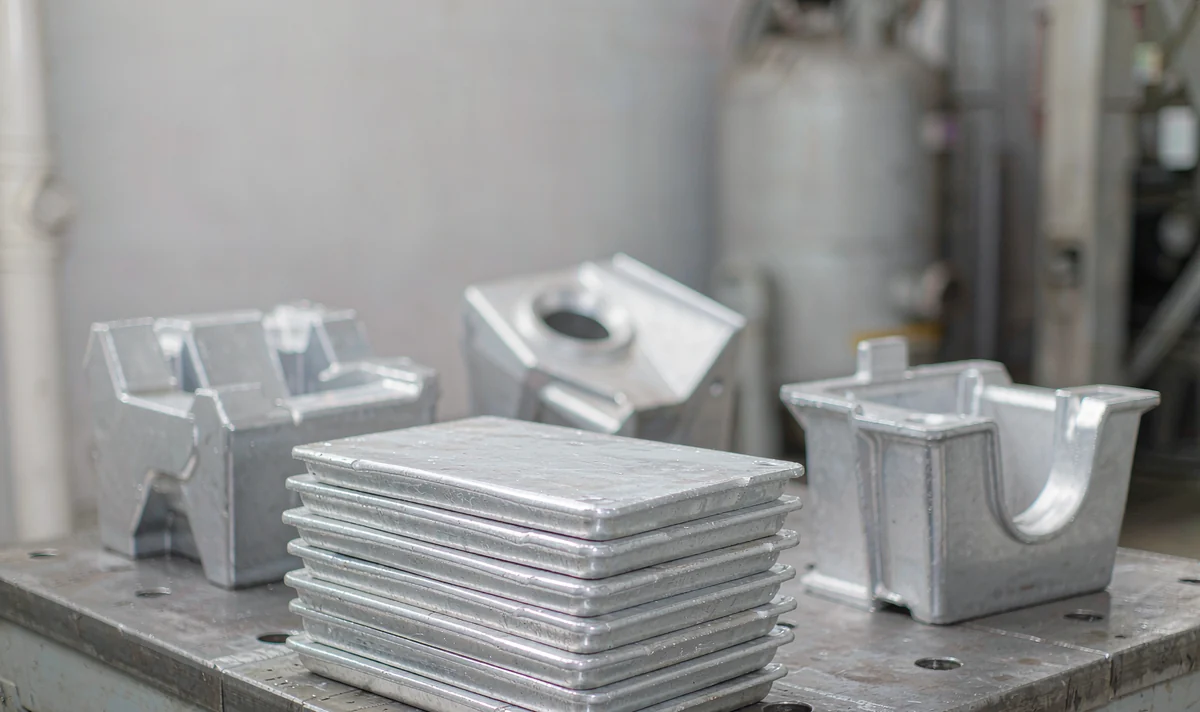

Aluminum & Zinc Die Casting Manufacturer
ISO 9001-aligned quality system
Spectrometer chemistry check on every heat
Secondary and primary grades
Material certificates with each lot
| Alloy | Si | Cu | Character | Typical use |
|---|---|---|---|---|
| A380 | 7.5–9.5% | 3.0–4.0% | Excellent castability, good strength | General housings, brackets |
| ADC12 | 9.6–12% | 1.5–3.5% | Japanese grade, near-equivalent to A380 | Electronics, automotive |
| A360 | 9.0–10.0% | ≤0.6% | Better corrosion resistance and ductility | Outdoor, marine, wet service |
| A413 | 11.0–13.0% | ≤1.0% | Best pressure tightness | Leak-tight housings, hydraulic parts |
| B390 | 16–18% | 4.0–5.0% | High wear resistance, low ductility | Pulleys, pump bodies |
Aluminum & Zinc Die Casting
© 2026 SUNGREAT. All rights reserved.